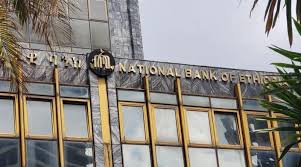
Ethiopia’s central bank has maintained its benchmark interest rate at 15 percent while tightening liquidity measures, as inflation continues to ease and the economy posts robust growth.
At its fifth meeting on December 22, 2025, the National Bank of Ethiopia’s (NBE) Monetary Policy Committee (MPC) reviewed developments in the real economy, inflation, the external sector, and global conditions before recommending policy measures later approved by the bank’s board.
The committee noted that headline inflation stood at 10.9 percent in November 2025, continuing a downward trend toward the central bank’s goal of single-digit inflation.
“While progress is evident, the target has not yet been achieved,” the MPC said.
Food inflation fell to 10.6 percent from 18.5 percent a year earlier, and non-food inflation declined to 11.4 percent.
Month-on-month deflation of 1.4 percent in November highlighted continued easing of price pressures.
Economic growth remained strong, with real GDP expanding 9.2 percent in the 2024/25 financial year, outperforming the eight-year average of 7.5 percent.
Growth was particularly notable in the industrial sector, driven by mining and quarrying, including gold production, which contributed 10 percent of GDP, up from 0.1 percent the previous year.
Agriculture and services also recorded steady gains, supported by supply-side initiatives, easing foreign exchange constraints, and improvements in transport and tourism.
However, the MPC highlighted some weaknesses, including declines in certain exports, lower petroleum imports, and reduced imports of raw materials.
Monetary developments also raised caution, with broad money rising 38.8 percent year-on-year and base money expanding 67.3 percent by November.
Outstanding bank credit grew 44.5 percent, driven in part by liquidity injected through foreign exchange accumulation linked to gold purchases.
The banking sector was deemed sound, with low non-performing loans and adequate capital, though some banks faced liquidity pressures due to high loan-to-deposit ratios. New facilities from the central bank helped ease short-term strains.
Against this backdrop, the MPC decided to maintain the National Bank Rate at 15 percent, keep the credit growth cap at 24 percent year-on-year, raise the reserve requirement ratio to 10 percent on a monthly average, and eliminate the minimum deposit interest rate to strengthen policy effectiveness.
The committee emphasized that a tight monetary stance remains critical to achieving price stability and announced it will meet again at the end of March 2026, or earlier if conditions warrant.































Comments
Sign in with Google to comment, reply, and like comments.
Continue with Google